Guangzhou, China
Import and Export Commodity Trading Exhibition Hall Zone B
Date: November 18-20, 2026


fromthe United StatesWinning Shipping Company and the Organizing Committee of the Asia Pacific Digital Printing Exhibition jointly conducted research,Covering 208 printing enterprises nationwide, with over 70% of the sample concentrated in Guangdong, mainly small and medium-sized enterprises (83% with less than 100 employees and 61% with annual revenue below 5 million yuan), complete data has been formed around product structure, technology selection, equipment procurement, budget, investment motives, and AI and automation implementation. The following is an independent summary by industry.
01
Overview of Market and Enterprise Fundamentals
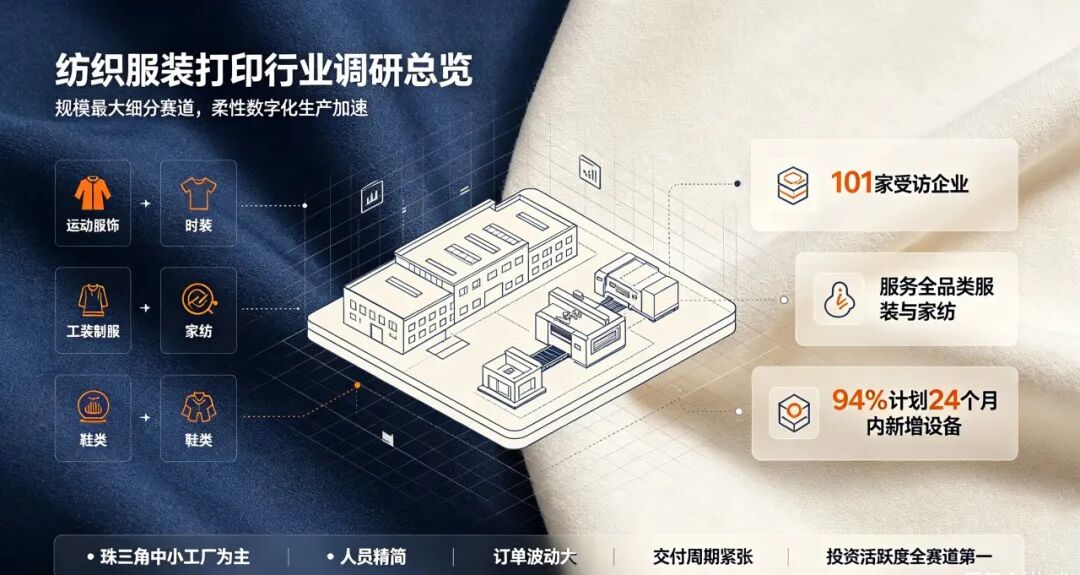
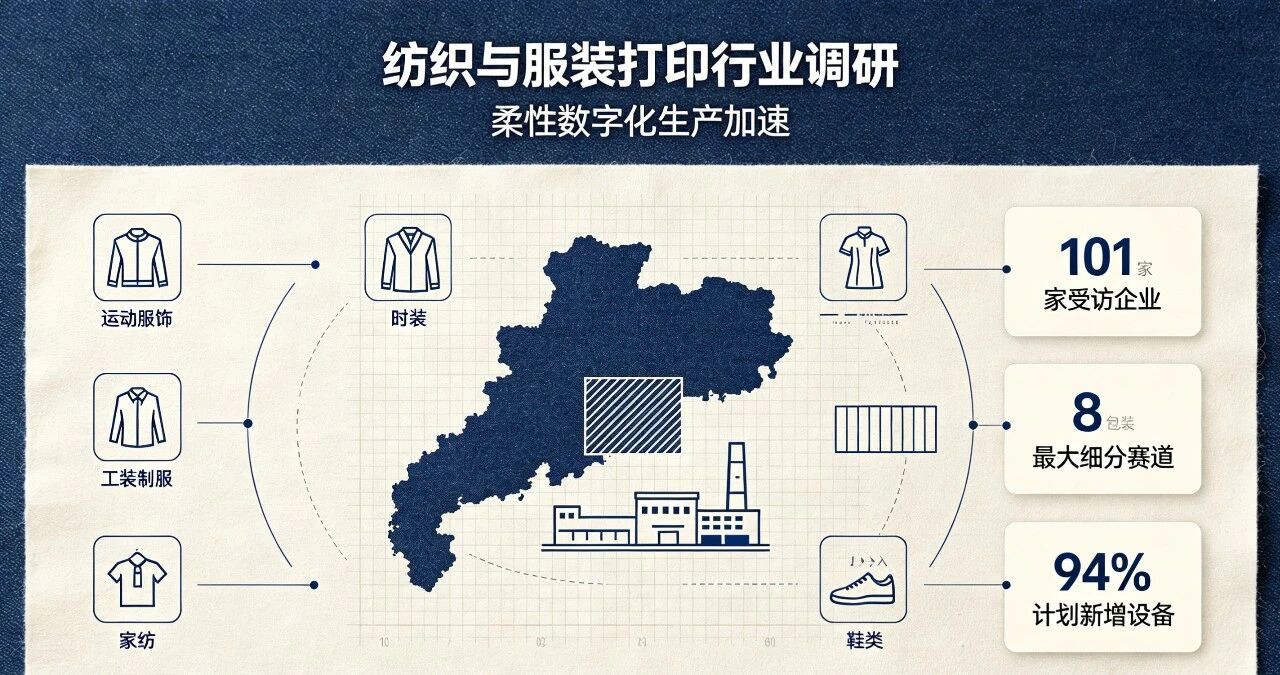
Textile and clothing printing is the largest segmented field in this survey, with a total of 101 surveyed enterprises, serving the full range of sports apparel, fashion, workwear uniforms, home textiles, and footwear categories. Enterprises are mainly small and medium-sized factories in the Pearl River Delta, with streamlined personnel, large fluctuations in orders, and tight delivery cycles, highly relying on flexible digital production; More than 94% of enterprises plan to add new equipment within 24 months, ranking first in industry investment activity across the entire track.
02
Product and mainstream demand structure
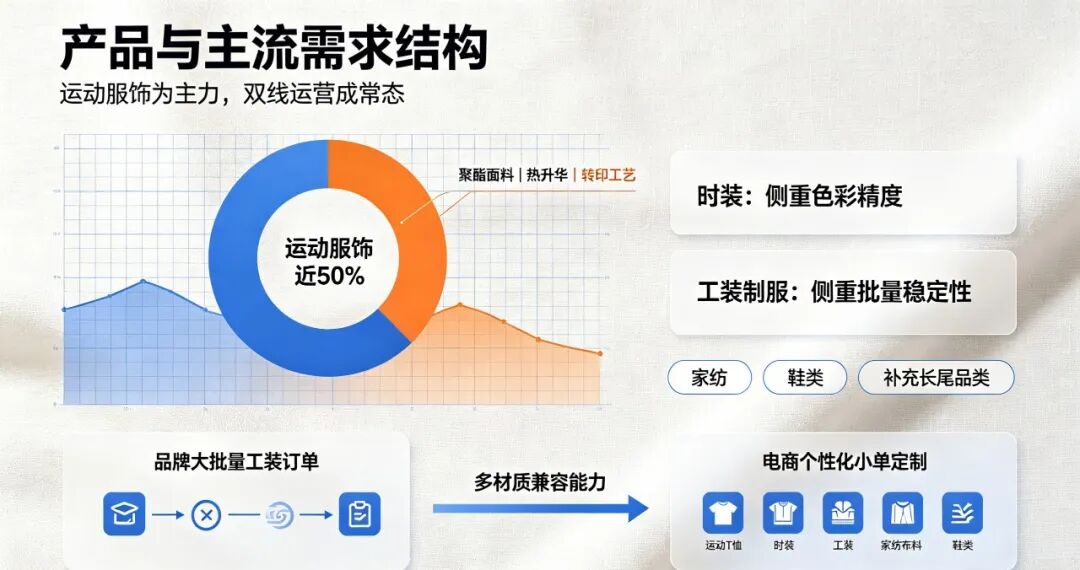
- Core category: Sportswear accounts for nearly 50% and is the absolute mainstay, suitable for polyester fabric+sublimation/transfer printing technology; Fashion and workwear uniforms divide the secondary market equally, focusing on color accuracy and batch stability respectively; Home textiles and footwear are complementary to the long tail category.
- Industry characteristics: Enterprises generally operate in a dual line manner, undertaking both large-scale tooling orders from brands and personalized small order customization for e-commerce, with extremely high requirements for equipment compatibility with multiple materials.
03
Current technology layout and future procurement direction
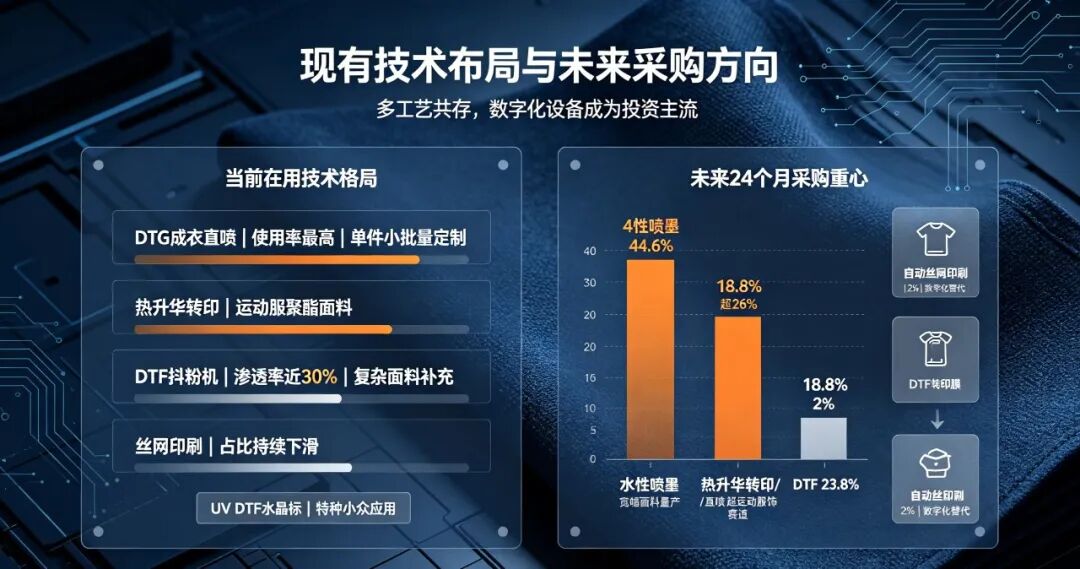
1. Diversified technology in use, without a single monopoly process
2. Procurement focus for the next 24 months
04
Equipment procurement budget stratification
The industry budget shows polarization:
High end production capacity: 49.5% of enterprises have budgets exceeding 500000 yuan, 28.7% exceed 1 million yuan, with a focus on industrial grade productionRoll to roll inkjetMass production of DTF/DTG equipment; Mid end expansion: 23.8% budget of 200000 to 500000 yuan, upgrading mid-range digital devices; Small scale supporting facilities: 26.7% budget below 200000 yuan, purchase small hot stamping and single auxiliary equipment.
05
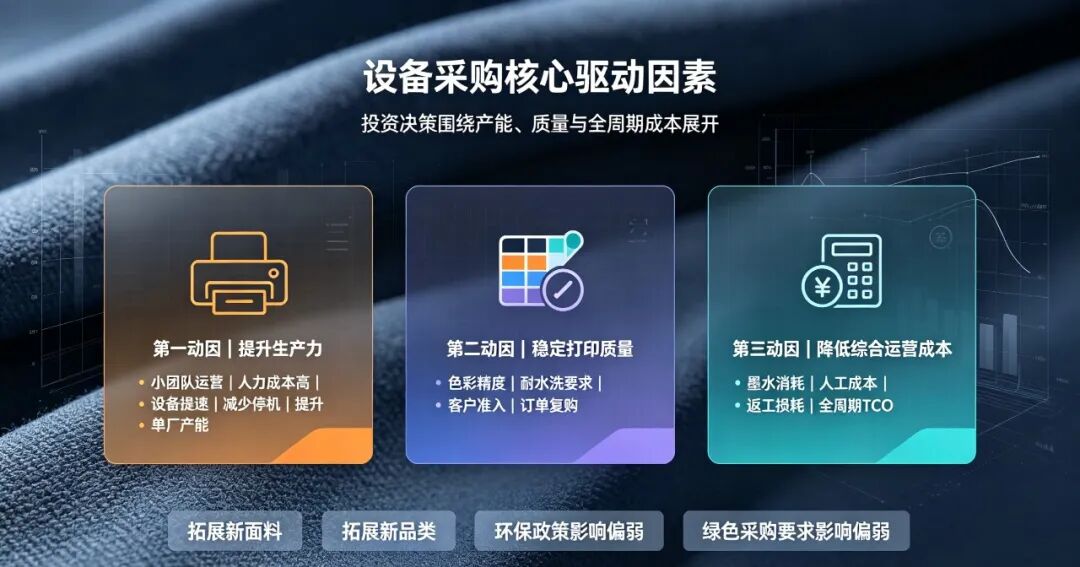
Core driving factors for equipment procurement
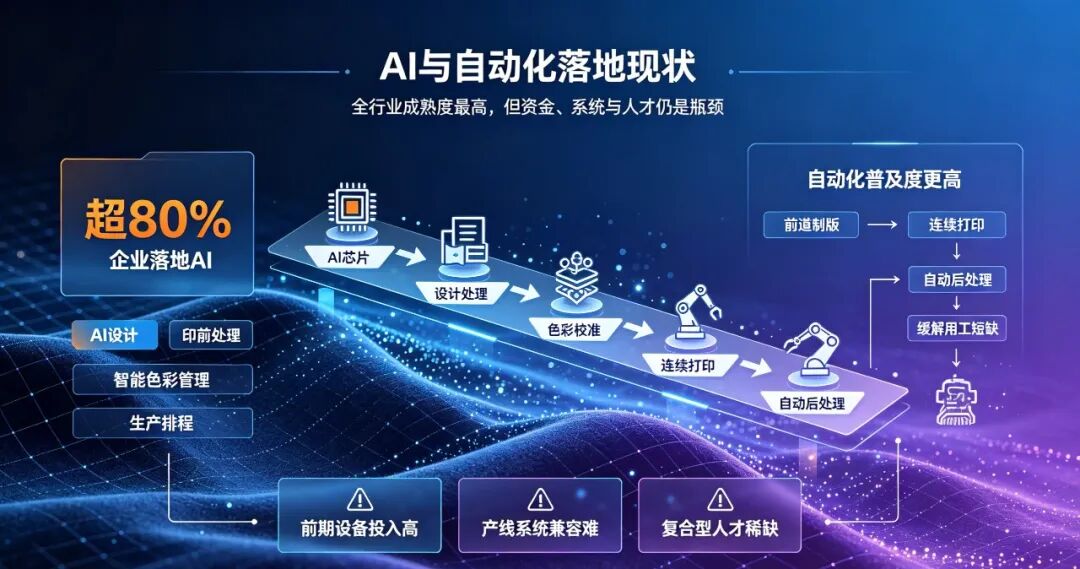
06 The current status of AI and automation implementation (with the highest maturity in the entire industry) 07 Overall summary and development trend of the industry The textile and clothing printing track is fully digitized, DTG、DTF、 The four major technologies of water-based inkjet and thermal sublimation coexist in synergy, no longer relying solely on screen printing. Practical investment logic for enterprises, prioritizing pursuitCapacity, quality, and cost reductionTriple income, flexible small order quick response is the core competitiveness. AI and automation are leading the industry, but funding, talent, and system integration remain the biggest obstacles to transformation; In the medium to long term, the industry will continue to increase the use of wide water-based fabric inkjet and DTF transfer printing equipment, taking into account both large-scale fabric production and personalized garment customization.
Contact Us
- Address:Room 904, Greenland Center, Financial City, No. 662 Huangpu Avenue Middle, Tianhe District, Guangzhou City
- Phone:020-89300178/89300188
- Email:gzboya@vip.163.com
email subscription
- Click to subscribe to email now (industry news, exhibitor updates, etc.)
- submit
- I want to visit | Be an exhibitor | Cloud exhibition | Events
Follow us